As we continue through the 7 principles of evolution/transformation, we’ve now hit the truly operational point: process. With our purpose defined, a general path laid out, and progress being benchmarked and monitored, we can get into the tactical phase of the change. Just as a refresher, I defined this phase early on as:
Process: Convert directional path into clear foundational plan for all parts of your organization – people, tools, processes – and begin sustained cultural changes that will propel your team into the future.
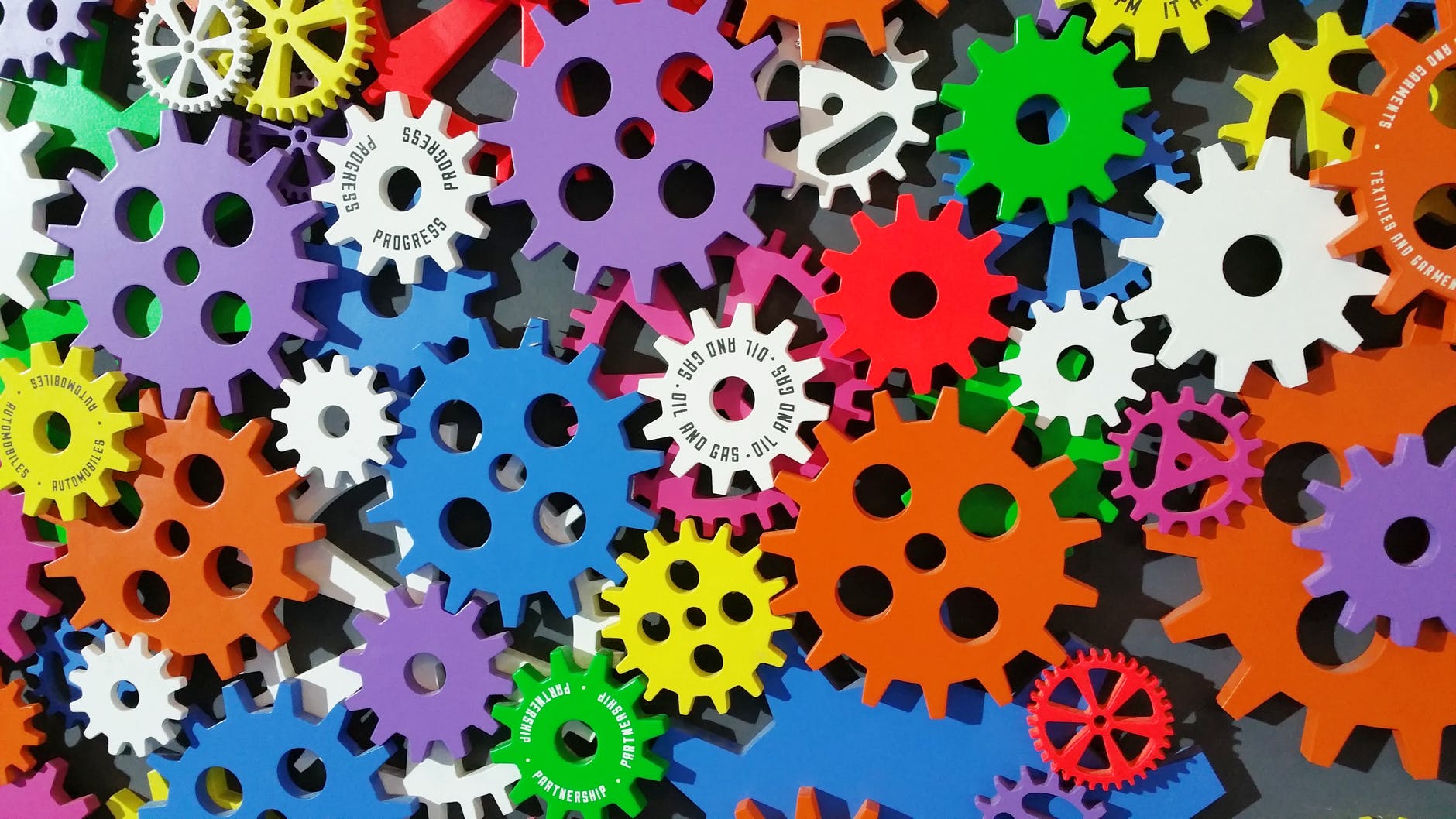
So really the process segment of the journey is where you and your team will lay out the foundational plans for the key aspects of the team. You will need to prioritize these foundational elements and should focus them on customer impact first, internal value second. The four areas Ill focus on in this post: people, tools, work processes, and tactical culture. As you think through each area, you will want to keep front of mind that all these processes and areas are all making up the ecosystem for your team – and thus need to fit together in a logical way (unlike the above where some of the gears align but many, many don’t).
People –
When you envision a different future, you need to be deliberate in understanding the types of people who will thrive in that future. This serves as your foundational plan for org structure and skill. My advice is twofold. First, rethink your job descriptions for your roles with a focus on the necessary role qualifications, aptitude, attitude, and transferable skills that will make your new vision a success. As I’ve posted about before, the intent is to find people who not only can do the work but also will be happy in the role and on the team. (You can read more here: https://viewfromthemiddle.work/2022/03/24/my-how-focus-on-attitude-aptitude-and-transferable-skill/)
Second, you need to evaluate your current team and see how well they fit your future state. There will likely be three groups: absolutely fit, will fit with some work, and do not/will not fit. My advice is to make a strategy for all three. You want to amplify those that absolutely fit, as they will influence those that will fit with some work. You’ll want to have concrete plans to mold those that will fit with some work beyond just hoping the absolute fits rub off on them. Finally, and most difficultly, you’ll need to determine how to proceed with the do not/will not fit group. From my experience, the first thing to do is to clearly lay out the expectations for the people in that group for them to see and understand. Next, begin to share any options they may have within the organization where they do align. Both of those may help people select to move on as they see they are a do not/will not fit. For those that don’t, you’ll need to manage their performance relative to your expectations – likely it will lead to a parting of ways, but there is always a chance you could be pleasantly surprised. This process is not enjoyable, to be sure, but it is a necessary one to create an environment where everyone is rallied around your team’s purpose.
Tools –
Often times, to get from here to there you will need to add, subtract, and/or change the tools you are using to accomplish the work of today and tomorrow. This process of evaluation will form your foundational plan for technology within your team. Always start with an assessment of the problems you will solve/work you will be doing in the future and then assess the tools that could help you get there. Be thoughtful about how the tool ecosystem: How many? How often are they used? How do they work together/integrate? Are the sum benefit of the tools equal to or greater than the value of their parts?
For each of your problems/roles, start by assessing the tools you have today to see if they can get you where you want to go comparably to a new tool – it’s far easier to use the existing tools (even with minor or medium modifications) than starting at 0 with a new tool. Evaluate if there are areas that are not tool-rich today that using a new tool could improve or aid. This doesn’t mean introduce tools because they are trendy, you feel like you should be using a tool, or because the rest of the org has a tool – be selective in understanding the specific problem you are solving and adopt the right tool to get you there. When you evaluate current and new tools, you need to thorough and decisive, because you’ll also want to build plans to decommission/discontinue use of the older, outgoing, or unnecessary tools to manage your overall tool portfolio.
Work Process –
One of the least focused on but most important parts of a change journey is working through process mapping and documentation. You absolutely want to have a foundational plan to create, document, and maintain processes and the accompanying documents. I typically follow a documented process to build a process foundational plan – process for a process, I know!
There aren’t a ton of steps – work with the team role by role to document all the ongoing processes in their area, organize them sequentially (where applicable), create a weighted rubric to evaluate the processes for prioritization (some ideas for categories – customer impact, level of effort to build, level of effort to implement, return on investment, etc.), prioritize based on the weighted rubric, assign and build, continually follow up to update progress, prioritization, queue processes for work, and continually reevaluate the list for new/outdated processes. Beyond this, create an ongoing process to review and maintain existing processes regularly so that your documentation stays in lockstep with your operations.
Tactical Culture –
While listed last, building a plan to establish your foundational culture will in some ways be underway. This isn’t the “we have fun!” part of your culture – this is intended to be the more tactical “how we work, how we manage, and how we accomplish” culture. You will have already established the purpose of your team which will absolutely be a factor in your culture. You’ll also go a long way towards defining your future culture by making your foundational plan for people in your org (structure, skill, and competency). Even the processes you create (and how you create/monitor adherence) will factor into the culture you are creating. Your individual leadership style and philosophy will also be a large factor in the culture you intend to create.
So with all these things in place, what do you do? With intention, you need to take time and explicitly determine and communicate what your foundational culture should be – and you can simply get started by being clear about what you value. Is it more important to move fast or be highly accurate? Is it better to be decisive or collaborative in decision making? Are the results or the communications of those results more valuable?
These aren’t “right or wrong” questions, but they are facets of your functional culture that you’ll want to design, communicate, and nurture, because team and organizational culture isn’t something you can “build”…at best you can “grow” it by planting seeds, nurturing, and having ample fertilizer (people on the team who will provide the water, sunlight, nutrients, etc.). Your culture begins to grow and flower from the foundational plan you put in place…and if you aren’t explicit, you may have growth in unexpected ways and places that you didn’t want. Conversely, your seeds could grow to something well beyond your wildest dreams with a team that values those foundational seeds as much as you do and is dedicated to nurturing them.
Pulling it all together, having and executing on foundational plans for your people strategy, tools, work processes, and tactical culture will be the process engine that takes your change from theory to reality. These are all areas that you’ll want to monitor and celebrate your progress (the P we discussed in my last post). This is the hard work of change – it isn’t fast, easy, direct, or outwardly rewarding – but if you are pragmatic and conscientious in working through it, your change has an excellent chance of success (both happening and being maintained).
 View from the Middle